Service
Exterior Waterproofing.
Exterior waterproofing intercepts water at the outside face of the foundation before it can reach the basement. It depends on access, soil, and where water can be discharged.
How It Works
Stop water at the wall, not after it comes in.
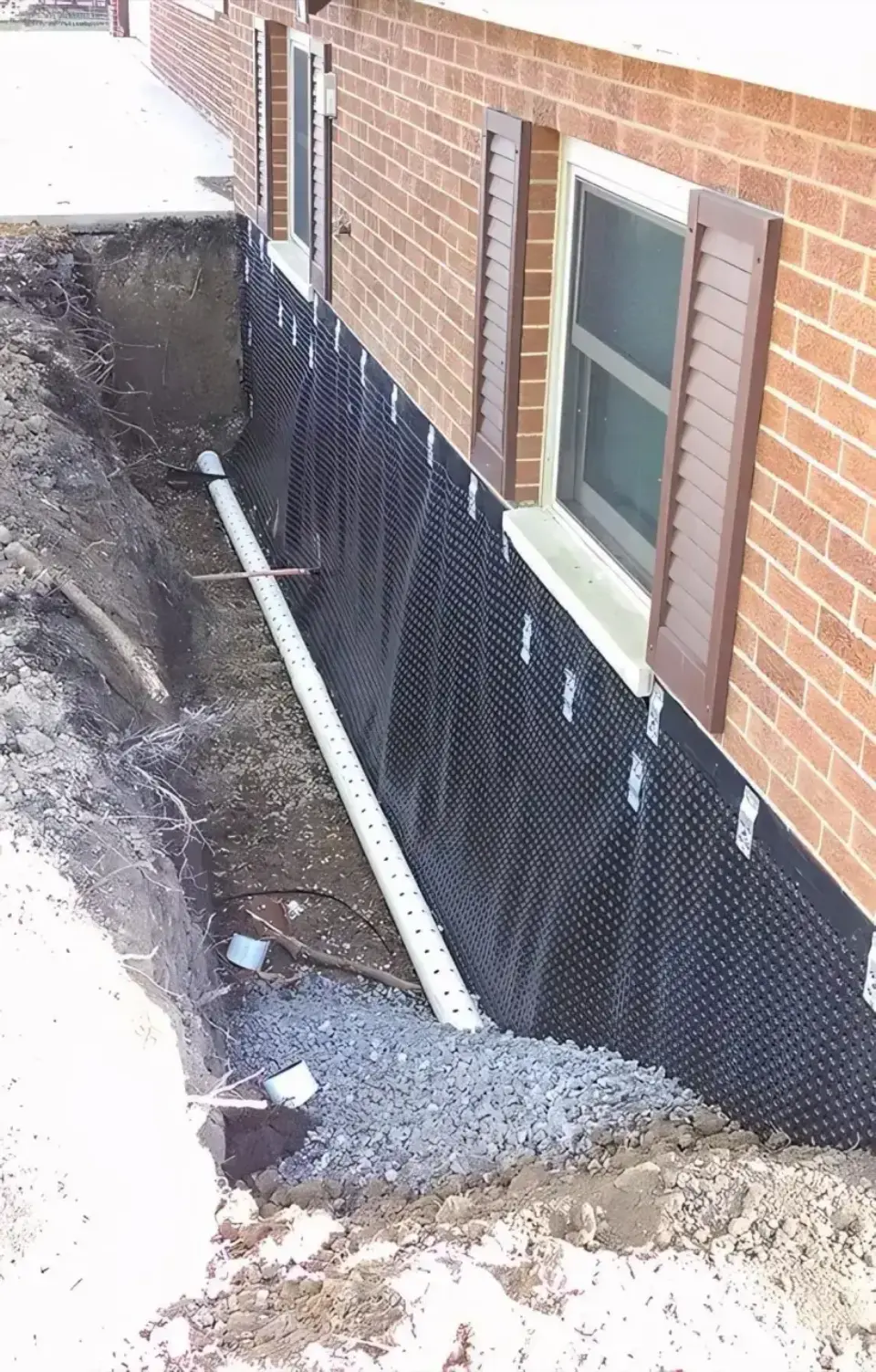
An exterior approach digs down along the foundation to expose the wall, addresses the wall itself, and installs drainage at the base that carries water away. Because the work is outside, it also lets us correct grading and downspout problems that send surface water toward the house.
Not every property allows this. Excavation needs room to work, safe support for the dig, and a legal place for the water to go. Where a side yard is too tight or an access route can't be protected, we say so and look at interior options instead.
The method — membrane, drainage board, footing drain, or a combination — is selected after the wall and site are seen, not before.
Scope
What exterior waterproofing involves.
Wall exposure & access
Excavating along the wall where there is safe access, with shoring and protection as conditions require.
Grading & downspouts
Correcting grade, extending downspouts, and fixing the surface-water paths that feed the foundation.
Wall treatment
Preparing the wall and applying the membrane or drainage treatment appropriate to the wall type and condition.
Exterior drain
A footing or perimeter drain that collects water at the base and routes it to a discharge point.
Legal discharge route
Choosing a destination for the water based on site conditions and local requirements.
Restoration
Backfilling and restoring the excavated area as part of the agreed scope.
Exterior work is feasibility-dependent. Tight lots, mature plantings, hardscape, utilities, and where the water can legally go all affect whether this is the right route.
Common Signs
Signs the water is coming through the wall.
These patterns often point to water reaching the outside of the foundation.
Water entering along the top or middle of the wall.
Damp or stained walls after heavy rain.
White mineral deposits (efflorescence) on the wall face.
Grading or downspouts that send water toward the house.
Cracks that weep or stain at the wall.
A wet area that gets worse after storms.
Any one of these points to something worth inspecting — not a confirmed cause. The assessment sorts that out.
What We Assess
What we check before recommending exterior work.
- Exterior access and room to excavate safely.
- Grade, downspouts, and surface-water paths.
- Wall type, condition, and any existing coatings.
- Depth to the footing and where a drain can sit.
- Where water can legally be discharged.
- Utilities, plantings, and hardscape near the dig.
How the Work Goes
How exterior waterproofing goes.
- Expose the wall where safe access allows.
- Correct grading and downspout routing.
- Treat the wall and install exterior drainage.
- Route water to an approved discharge point.
- Backfill and restore the excavated area.
Local Context
When exterior is the better fit.
Exterior work can make sense when there is safe access, when walls are bowed or badly cracked, or when the exterior is already being dug for other reasons. It is not automatically better than an interior system — it is a question of source, access, and discharge.
Questions
Straight answers about exterior waterproofing.
Do I need to move landscaping or hardscape?
How far down do you excavate?
Where does the water go afterward?
Is exterior always better than interior?
What if excavation is not feasible?
Water coming in through the walls?
Request an assessment and find out whether exterior work fits your site.