Service
French Drains & Drainage Systems.
Drainage is about moving water on purpose. Exterior French drains, interior perimeter drains, grading, and discharge are different tools that solve different problems.
How It Works
Every drain is only as good as its destination.
A drain that collects water still needs a place to send it. Too often a system disappoints not because the pipe failed but because the discharge point, the slope, or the outlet was never designed properly in the first place.
An exterior French drain collects subsurface water in a gravel-and-pipe trench outside the foundation. An interior perimeter drain collects water at the inside base of the wall. They are not the same thing, and they are not interchangeable.
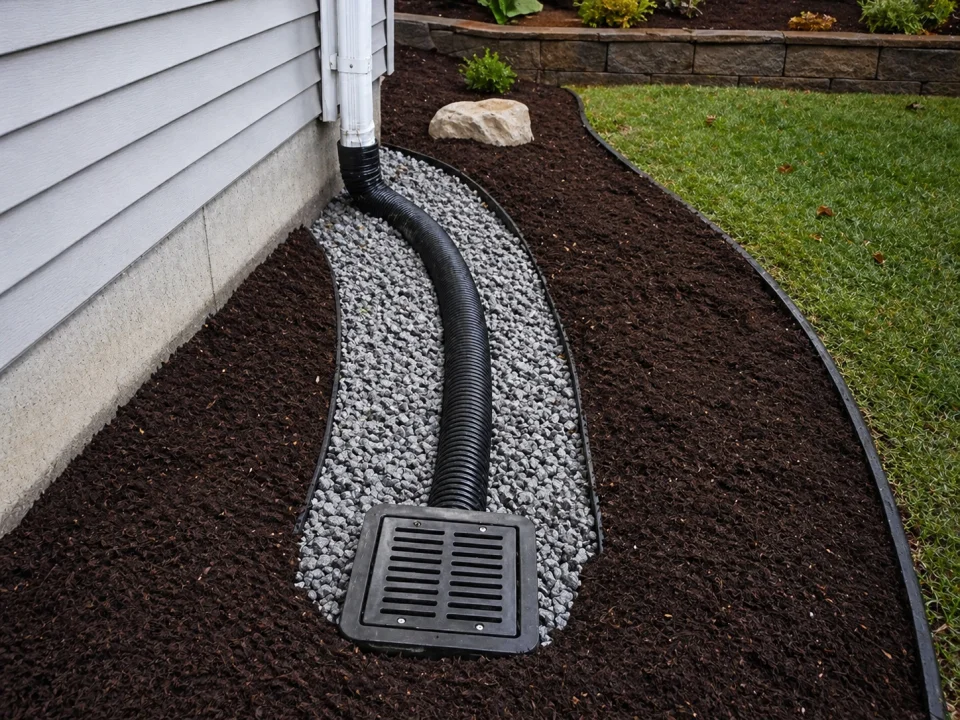
Grading, downspout extensions, surface swales, and window-well drains handle water before it ever reaches the foundation. The right combination depends on how water moves across the specific property.
Scope
Drainage systems we design and install.
Exterior French drains
A gravel-and-pipe trench outside the foundation that intercepts subsurface water.
Interior perimeter drainage
A drain at the inside base of the wall that collects water reaching the interior.
Surface drainage & grading
Reshaping grade and adding swales so surface water runs away, not toward, the house.
Sump discharge
Routing collected water to a destination that actually works and meets local requirements.
Window-well drainage
Draining window wells so they do not collect water against the foundation wall.
Downspout management
Extensions and routing that keep roof water away from the foundation.
System design and the discharge destination depend on site conditions, slope, soil, and local requirements — which is why two similar-looking basements can need different drainage.
Common Signs
Signs drainage is the missing piece.
These often mean water is not being routed away from the foundation.
Standing water or a soggy area near the foundation.
Water collecting in window wells.
A French drain or sump that stopped working.
Downspouts discharging right at the foundation.
Grading that slopes toward the house.
Recurring dampness after storms.
Any one of these points to something worth inspecting — not a confirmed cause. The assessment sorts that out.
What We Assess
What we check before designing drainage.
- How water moves across the property.
- Slope, soil type, and depth to groundwater.
- Downspout locations and existing drains.
- Window wells and low points against the wall.
- Where the water can be discharged, per local rules.
- Whether surface water, subsurface water, or both are involved.
How the Work Goes
How drainage work goes.
- Map where water goes and where it should go.
- Correct grading and downspout routing.
- Install the exterior or perimeter drain.
- Set a discharge destination that works.
- Test and verify flow away from the home.
Local Context
Drainage design is property-specific.
Slope, soil, mature trees, and neighboring grades all change how water moves in Bergen County. A drain copied from a neighbor’s yard rarely fits. The starting point is watching where water actually goes.
Questions
Straight answers about drainage.
Is a French drain the same as an interior drain?
Where does the collected water go?
Can grading alone fix my problem?
Why do I need window-well drainage?
How do I know which system I need?
Standing water or a drain that never worked?
Request an assessment and get the drainage designed around your property.