Service
Basement Waterproofing & Foundation Solutions.
Water in a basement is a symptom, not a verdict. We assess where it is coming from and whether interior, exterior, drainage, or foundation work fits your home.
What We Do
Diagnosis first. Method second.
Most wet basements in Bergen County trace back to one of a few patterns: hydrostatic pressure under the slab, a failed or missing perimeter drain, cracked or porous foundation walls, or runoff that grading and downspouts send toward the house. The pattern decides the fix.
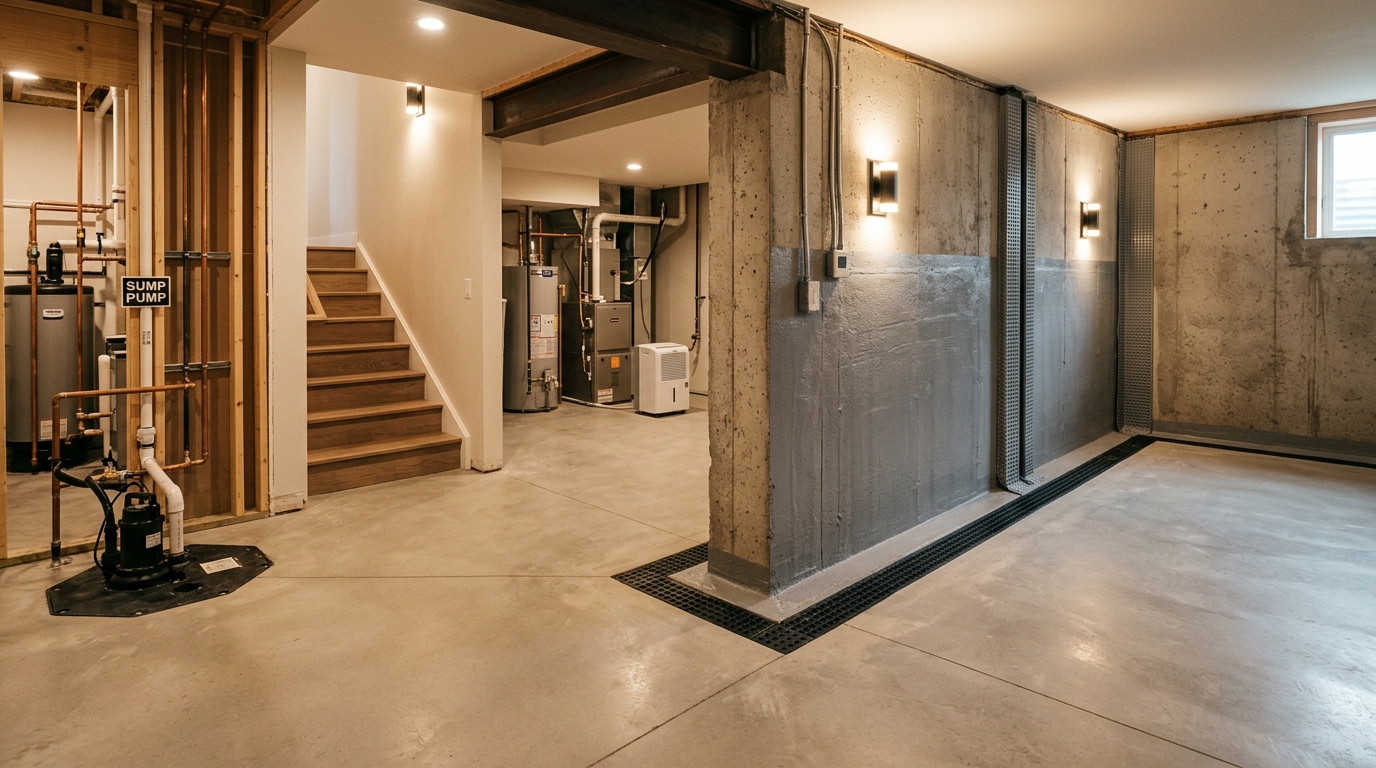
We start with a site assessment and walk the visible entry points, the grading and downspouts, the walls and floor joint, and any existing pumps or drains. You get an explanation of what we found and the realistic options — not a single predetermined system.
From there the work is scoped in writing. Water and structural issues are handled before any landscaping or interior finishing, so the repair isn't buried under new work.
Scope
Four focused services, one assessment.
Exterior Waterproofing
Water control at the outside face of the wall where site access and conditions allow.
Learn moreInterior Waterproofing
Perimeter drainage and sump systems that collect and remove water from inside the basement.
Learn moreFrench Drains & Drainage
Exterior French drains, perimeter drainage, surface grading, and discharge design.
Learn moreFoundation Repair
Assessment of cracks, seepage, movement, and settlement before any repair method is chosen.
Learn moreEach of these has its own page with scope, signs, and limitations. The overview exists to route you to the right one — not to repeat them.
Common Signs
Signs a basement needs a closer look.
These are the patterns that most often bring people to us.
Water or dampness on the floor after rain or snowmelt.
Damp patches, white mineral residue, or peeling paint on the walls.
A musty smell or elevated humidity without a visible leak.
Cracks in the wall or floor, or a wall that looks out of line.
A sump that runs often, or a drain that no longer keeps up.
Water stains near the floor-wall joint or under the stairs.
Any one of these points to something worth inspecting — not a confirmed cause. The assessment sorts that out.
What We Assess
What the assessment looks at.
- Where and when water appears.
- Grading, downspouts, and how surface water moves on the property.
- Wall type and condition, and the floor-wall joint.
- Existing pumps, drains, and where they discharge.
- Ceiling height, utilities, and safe exterior access.
- Whether the issue looks like water, structure, or both.
How the Work Goes
From first look to finished work.
- Assess the site and document what we find.
- Explain the options and what each one involves.
- Complete the agreed waterproofing or foundation work.
- Verify the result before any finishing goes on top.
Local Context
Why Bergen County basements see water.
Clay-heavy soil holds water against foundations. Many pre-1970s block walls were built without modern drainage detailing. Nor’easters and spring snowmelt push groundwater higher. We read the failure pattern before recommending interior, exterior, or grading-side work.
Questions
Straight answers about waterproofing and foundation work.
Why does my basement leak only sometimes?
Interior or exterior waterproofing — which do I need?
Can you finish the basement in the same project?
What does an assessment include?
How do you stand behind the work?
Wet basement? Get it looked at before the next storm.
Site assessment, written scope, clear next steps.
Related